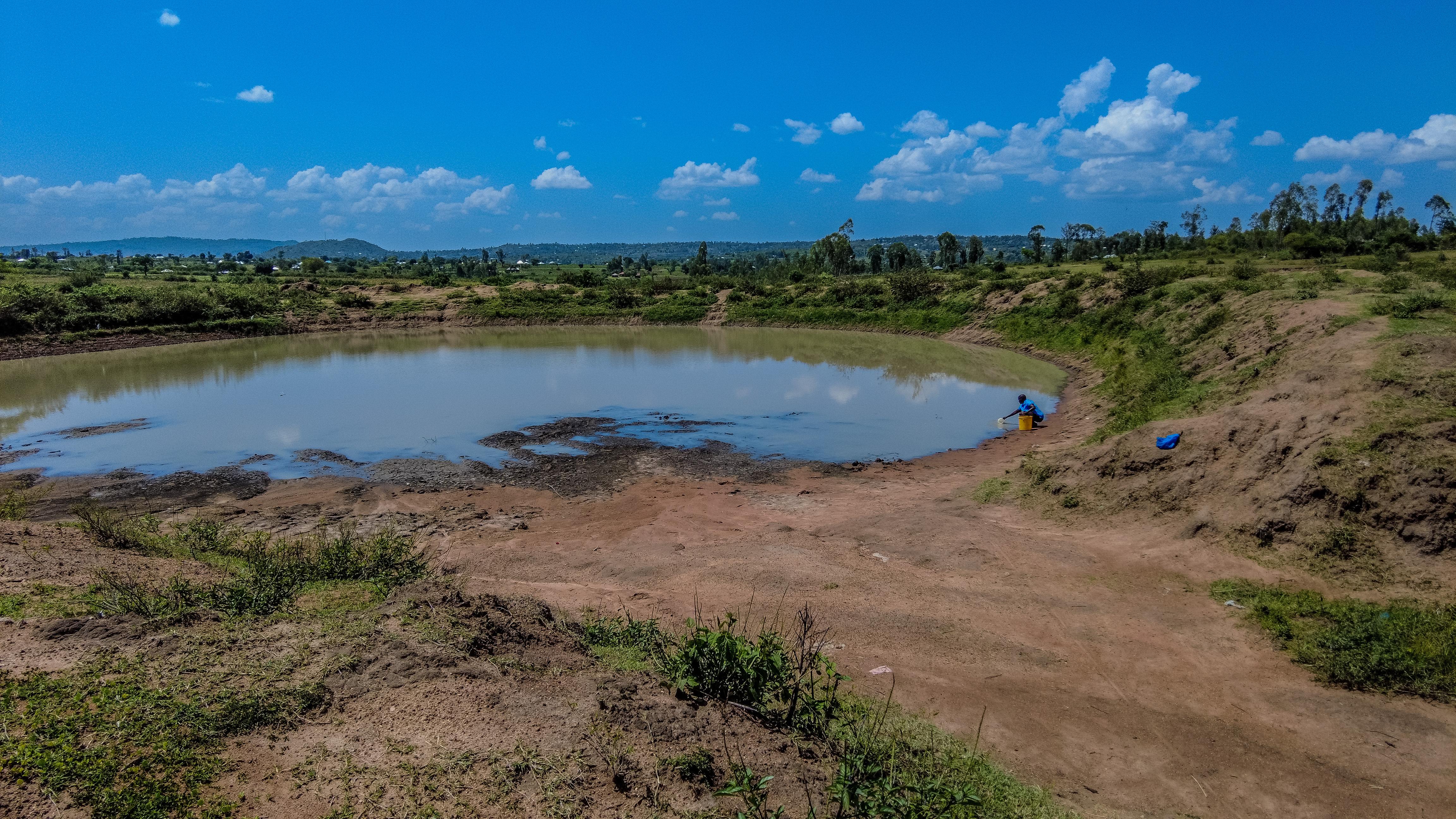
Migori town enjoys great weather. With the lush forests that line the mountains, it rains regularly. In fact, it rains quite a lot, so there is water to go by, but the town still has its own water-related problems, even though the Migori River passes right through the middle of it.
But my main focus today is not on Migori town. That is a story for another day. Today’s destination is Kadem, in Nyatike Sub-county, Migori County. It is not very accessible. Countable Probox vehicles go there, and they take ages to fill up. By the time you leave Migori town, you are bundled up and squeezed together like vegetables being shipped to the market. No matter, it’s a good day. The previous night, the rains were bountiful, accompanied by lightning and thunder.
The rains have been eager to pour after months of no show, and the people of Kadem have been waiting even longer. So we get bundled up, and the driver decides to use a shortcut, which turns out to be a tumultuous one, full of bumps that the driver clearly does not notice as he speeds, or rather flies, along the dirt road.

Finally, after two hours, we arrive in Cham Achichi. We are meeting the area chief, but first I need to stabilize my head after such a rocky journey.
Kadem has a long history of water problems spanning decades. It is mostly flat land and does not receive much rain, and when it does, there is flooding, with rivers bursting their banks. The current rising levels of Lake Victoria do not ease the situation, especially in this age of climate change.

Farming does not do well in Kadem, so most people are traders or fishermen. But water remains a huge problem, even though several rivers crisscross the region. The river water is not suitable for use, and women and girls, who are naturally expected to fetch water, have endured years of suffering mentally, physically, and emotionally in their quest for water.
The lack of water means they can only concentrate on its availability, or lack thereof, killing any dreams they may want to pursue for themselves. When you spend hours every day searching for water, it becomes a part of you; everything revolves around it.
We got to speak to women in Cham Achichi to share their stories about water and how their relationship with it has evolved over time. Yet nothing much has changed in this community when it comes to its history with water.
We still need water just as we have always needed it decades past
“I have been living in Cham Achichi for 40 years. I was married very young, so I know this place inside and out, and I found water problems when I came. Over the years, water has come closer, but only by an inch,” says Mildred Atieno Ouko, a resident of Cham Achichi, Kadem in Migori County.

Mildred takes her story back to when she first joined the village. Back then, water was just as scarce as it is now, and she remembers the long distances they had to walk to access it.
“There was a time, after a long extended period without rain, when it finally rained, and I was relieved because I thought my day of rest had come. However, that night we did not rest. Everyone was in our homestead collecting water from the only iron-sheet-roofed house in the region.”
Says Mildred Atieno Ouko

Mrs. Ouko says that back then, houses were grass-thatched, which made rainwater collection impossible. Her grandmother was the only person in the region with an iron-sheet roof, so whenever it rained, all the women in the community stayed awake through the night trying to collect water. There would be queues in the middle of the night as people scrambled to get water.
“I have grandchildren, and it pains me to know that what I went through because of water has now been transferred to them. The world we live in has become unsafe, and every time they go to fetch water, I worry until I see them return safe and sound,” says Mildred.
Water is life in the home, but it is also breaking my marriage
Josephine Atieno was married at the tender age of 18, and her marriage has always revolved around water. As soon as she stepped into her matrimonial home, the first duty she was involved in was the quest for water. It did not matter that she was new; water was urgently needed.

“I was married during a very dry season, around August. The river was dry, and we had to dig through the sand to access the water running beneath,” says Josephine, who has now been married for nine years.
She says her relationship with water has not changed much, even though a water point was recently brought closer to Olasi Primary School.
However, the water point is still not close enough, and so they can only use it for drinking, while most household chores still have to be done using water from the river. The nearby water point was only established last November, meaning her search for water has been much longer over the years.
Josephine also speaks about the poor stewardship of their main water source, River Ongoche, and the pollution affecting the river, even though some people still use it for drinking water. Although women like Josephine continue to raise concerns about the pollution, community members have not come together to properly care for the river.
“This is community water. No one hears your complaints, no matter how many times you try. Eventually, you give up. Either way, we still have to use it no matter what; we do not have much choice in the matter,” says Josephine, her brows furrowed in frustration.
Josephine mentions that her marriage is caught between the search for water, which is essential for life in her household, and keeping her marriage flourishing. Each time she has to wake up early to fetch water, her husband grumbles about the issue and complains about the amount of time she spends at the river.
When it rains, we rest
One common denominator is that whenever it rains, the women of Kadem, Migori County, can finally rest from the burden of looking for water.
“The search for water is constant here, and we can only rest when it rains,” says Zilper Achieng, 40, a resident of Cham Achichi.
Zilper is also no stranger to marriage woes associated with water. Whenever she goes to fetch water, her husband complains, and it often becomes a source of arguments in her home.
“Since you left, have you just been at the river?” is a very common question that disrupts peace in her marriage, all because of water.
When the quest for water risks your life and livelihood
Roselyn Anyango has been married for more than a decade, but one constant remains in her marriage: violence. Rose recounts several times her husband has beaten her, but what is most shocking are the beatings she received while out fetching water.
She lives far from their only source of water, River Kuja, and the trip to and from the river can take an hour or more. Whenever she goes to fetch water, her husband starts counting the time until she returns. When she gets back, she is met with the constant question: “Have you really been at the river all this time?” But the questioning does not stop there; it is often followed by a severe beating.
“There have been two instances where I smelled death at his hands. He beat me and left me for dead,” says Rose in a trembling voice.
As she tells her story, her voice quivers, and it is clear that she is reliving the trauma she has endured at the hands of her husband.
“My left eye does not see properly. There was a time he beat me until the skin around my eye tore open. I was rushed to the hospital near death,” says Roselyne. “As soon as I felt better, I went back home to my children.”
She has wanted to leave, but she never does because of her children.
When you encounter near-death experiences over something as life-giving as water, then when is safety guaranteed? This is the case for Eunice and her daughter. Eunice is a widow whose fourth-born daughter was born with a mental disability.

Eunice has not had it easy caring for her daughter, but she loves her dearly. Her daughter, Atieno (not her real name), has been taught to take care of herself and do small chores around the homestead. This is an effort to help her become independent in case one day her mother is no longer around to care for her. Their home is only a few metres from the river. Even though it is closer than it is for most people, Atieno is still not safe.
“I realized she was pregnant, but she never said who it was. She was attacked at the river and impregnated by an unknown man,” says Eunice, recalling the painful ordeal.
Eunice says Atieno’s child, now older, attends a regular school. However, she struggles there because she was also born with a mental disability. Eunice stresses how difficult this has been for her as both a parent and a grandmother.

“One evening, Atieno had gone to fetch water as usual, but she took longer than expected. Because it was a dry season and it took time to fill her container, I was not too worried. When she finally returned, it was already dark, and I did not notice much. But the following morning, I saw dried blood on her legs,” recounts Eunice with a saddened expression.
Eunice later got a donkey after her daughter was assaulted a second time at the same river. The donkey now helps them transport water safely back home, meaning her daughter no longer has to go to the river to fetch water. She has also given up on seeking justice.
“I reported the matter to Nyatike Police Station and obtained a P3 form (medical examination report), but the man disappeared and his family is covering for him. How can I proceed under these circumstances?” asks Eunice with a defeated look.
The local government charts a way forward for the community
Winnie Malemba, Chief of Nyandago Central Location, Kadem Division in Nyatike South Sublocation, acknowledges the concerns raised by women about the challenges and risks they face while fetching water. She affirms that these fears are real and widespread within the community.
“This is a real concern in this location,” she says, noting that women and children are often exposed to unsafe conditions, especially at distant water sources.
She points to ongoing efforts aimed at improving access to safe water. “There are several active plans and water projects, and Central Location should benefit from in the near future,” she explains. Among them will be a fully funded solar water project that will serve a school and 174 households, as well as another which will support 106 households in a nearby village funded by the The National Government Constituencies Development Fund (CDF). “Bringing water closer to homes will help stop reliance on distant sources,” she adds. She also urges women to report cases of harassment to the authorities.

Beyond access, Malemba emphasizes the importance of community stewardship in protecting water sources. She highlights the formation of local water committees drawn from the community.
“The mandate is managing water points, hygiene, security, and the environment along the river,” she says.
These committees promote practices such as planting bamboo and water-friendly trees, preventing pollution, discouraging encroachment on wetlands, and ensuring that water sources are not shared with animals by fencing. They also work with schools to strengthen hygiene and sanitation practices.
On the issue of justice for women who experience violence while fetching water, she is clear. “Yes, women can find justice, but it usually takes three things: reporting immediately, community backup, and knowing where to go.” She acknowledges that many women remain silent due to fear and stigma, which is why community-based approaches are being used to encourage speaking out.
“What happens at the river is not private, it is a crime,” she says. Through women’s groups, role play, and community dialogues, efforts are being made to reduce fear and empower women to report violations. “The minute we start doing role play, the fear drops.”

Malemba also notes the need to involve men and community leaders in addressing the issue. “Some men do not see it as a crime,” she says, adding that elders and pastors are engaged to reinforce accountability and protection. In some cases, local systems impose penalties. “Village elders and water use committees fine men who harass women at water points, and the money goes into maintenance.” Turning safety into interest.
Borrowing a leaf from Wath Ong’er to foster safe water access points
In Wath Ong’er, in Kadem, Migori County, there is a project that is helping women close to the market centre access safe water. This is through the Maji Safi Water Kiosk, a system that allows for water filtration straight from River Kuja, the only water body in the region. The filtered water makes it easier for the community to access clean drinking water, but it also keeps them safe from the atrocities that used to occur at the river, such as deaths and rapes.

It is also important to note that even though the kiosk is changing the narrative in this region, Wath Ong’er is still thirsty. There are still many women and children at risk when accessing water from the river, as some cannot access the kiosk due to distance.
The key, therefore, as much as this helps, is to have as many water kiosks as possible so that each clan or community has a water point accessible to them. This also applies to the people of Cham Achichi. It really does not have to be a water kiosk; even boreholes and wells can do well to keep women and children safe. Allow them an equal chance to achieve their dreams. Give them a fair chance to succeed in life, not a life that is full of water woes and the pain that comes with its quest.
We all deserve this. Water is a human right, and no one should have to live a life without safe and clean water.


Leave a Reply